
Imagine a world where a single cup of tea doesn’t just quench your thirst- it sparks a revolution. In just eight years, a small tea shop in China called CHAGEE, or Bawang Chaji, went from obscurity to a $6.2 billion empire, slinging over 600 million cups of jasmine milk tea and landing on Nasdaq with a blockbuster IPO. How does a humble beverage brand outmaneuver giants in one of the world’s toughest markets and make Wall Street take notice? It’ a tale of relentless innovation, laser-focused strategy, and a tea latte that changed the game. Let’s dive into CHAGEE’s meteoric rise, unpack the secrets behind its success, and ask: Can it become the Starbucks of tea, or is this empire brewing trouble?

From One Shop to 6,000: The CHAGEE Miracle
Picture this: It’s 2017, and CHAGEE is just another tea stall in China’s crowded milk tea scene, where brands slug it out for every customer. Fast-forward to 2025, and CHAGEE isn’t just surviving – it’s thriving with over 6,000 stores, $350 million in profit, and a 24x revenue surge in just three years. On April 17, 2025, it raised $411 million in a Nasdaq IPO, pricing 14.7 million shares at $28 each, valuing the company at $5.1 billion. When trading began under the ticker CHA, shares soared 21% to $33.75, pushing its valuation to $6.2 billion. This isn’t just growth; it’s a masterclass in scaling.
CHAGEE pulled it off in China’s milk tea market, a cutthroat arena where brands like Guming and Mixue bleed market share. And it didn’t stop there – it became the first Chinese consumer brand in four years to list in the U.S., defying trade tensions and a shaky IPO market. So, how did CHAGEE turn tea into gold? Let’s break it down.
The Product That Started It All: Buoya Juexian
At the heart of CHAGEE’s empire is a single drink: Buoya Juexian, a jasmine milk tea that’s less a beverage and more a cultural phenomenon. In 2023 alone, CHAGEE sold 300 million cups, and to date, over 600 million have flown off the counters. Why is it so addictive? Three words: simple, standardized, scalable.

Unlike fruit teas that need fresh ingredients and cold-chain logistics, Buoya Juexian is made from just tea, milk, and syrup. No refrigeration, no imported mangoes, no seasonal headaches. This simplicity slashes logistics costs to under 1% of transactions – half the industry’s 2% average. Inventory turns over in a blazing 5.3 days, the fastest in the milk tea game. And here’s the kicker: automated tea machines churn out each drink in 8 seconds. New staff? They scan a QR code and start pouring on day one. CHAGEE turned milk tea into a factory-like process, and it’s this efficiency that fueled its explosive growth.
By 2024, original leaf milk tea, made up 91% of CHAGEE’s sales, up from 79% in 2022. Three core products, led by Buoya Juexian, account for 61% of revenue. CHAGEE bet big on tea lattes as the future of tea in China, and that bet paid off in spades.
A Franchise Model That Rewrote the Rules
Scaling to 6,000 stores sounds like a logistical nightmare, but CHAGEE cracked the code with its managed franchise model. Over 90% of its stores are franchised, but don’t picture a free-for-all. CHAGEE runs a tight ship, blending scale with control in a way that leaves competitors in the dust.
First, standardization is non-negotiable. Every store follows strict operating procedures, from sourcing ingredients to serving customers, ensuring the same CHAGEE experience whether you’re in Shanghai or Shenzhen. Second, franchisees aren’t just anyone with cash. CHAGEE’s team picks every store location, demands minimum capital, and requires food and beverage experience. Third, stores are graded on quality, service, hygiene, and compliance. Fall into the bottom tiers? CHAGEE sends a task force to whip you into shape. Still slipping? They’ll shut you down.
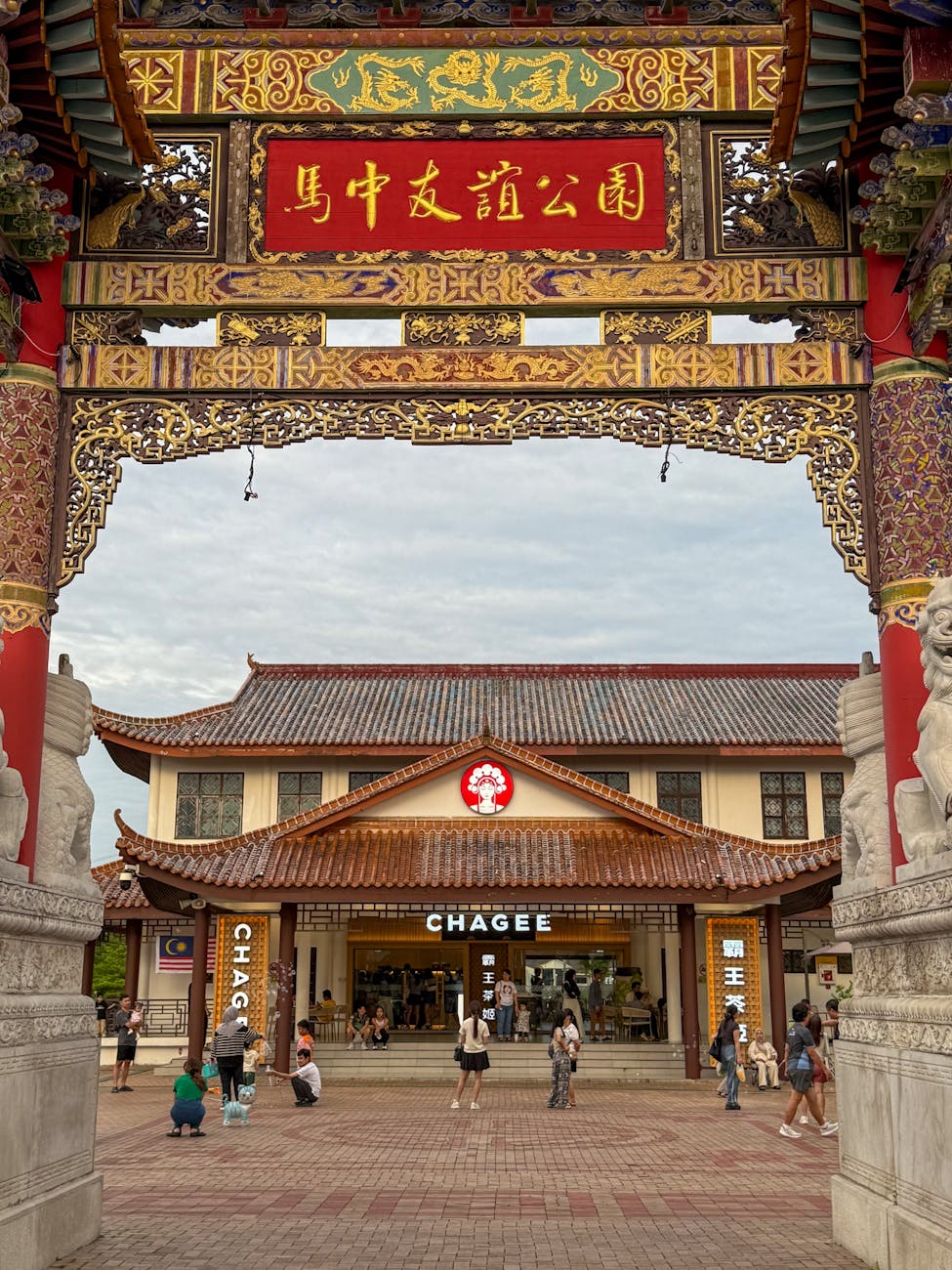
The contracts are ironclad: one-year terms, termination rights for violations like subleasing, and franchisees are personally liable for brand damage—think food safety scandals or bad press. If a franchisee wants out, CHAGEE gets first dibs to take over. This control keeps the network clean and profitable. In 2024, stores averaged $72,000 in monthly revenue, with closure rates at just 0.5% in 2023 and 1.5% in 2024, compared to Guming’s 4.5% or Mixue’s 2.8%. CHAGEE isn’t just expanding; it’s building a fortress.
Branding That Screams Premium
CHAGEE didn’t just sell tea, it sold a lifestyle. Positioning itself in the premium tea market, where cups cost $2.40 or more, was a stroke of genius. China’s made-to-order tea market ballooned from $14.3 billion in 2019 to $38 billion in 2024, with the premium segment soaring from 10.9% to 25.9% of the market. By 2028, it’s expected to hit $23.4 billion. CHAGEE owns this space.
Its stores, typically 60–80 square meters, are built in a month and nestled in high-end malls in tier 1 and 2 cities, with Shanghai boasting the most locations. Sleek designs and upscale packaging scream sophistication. But CHAGEE’s real edge is its health-conscious identity: whole leaf tea, no trans fats, no non-dairy creamer, transparent nutrition labeling, and low-caffeine options like the Ching Yin series. It’s premium, clean, and resonates with young, urban consumers obsessed with wellness.
Marketing? CHAGEE goes big, spending $154 million in 2024 comprising 9% of revenue, on campaigns that feel upscale but reach the masses. It’s like a boutique brand with the muscle of a fast-moving consumer goods giant.
The Nasdaq Triumph
CHAGEE’s Nasdaq debut on April 17, 2025, was a game-changer. Raising $411 million at $28 per share, it hit a $5.1 billion valuation, with shares jumping 21% to $33.75 on day one, boosting its worth to $6.2 billion. Backed by heavyweights like Citigroup and Morgan Stanley, and with cornerstone investors grabbing $205 million in shares, the IPO shone despite U.S.-China trade tensions and tariff threats. CHAGEE’s focus on domestic production sidestepped some cross-border risks, making it a rare win for a Chinese brand abroad.
Cracks in the Empire
But even empires have weak spots. Same-store growth is slowing as store density rises. In Q4 2024, gross merchandise value per store dropped 18.4%, with some Beijing and Shanghai franchises seeing monthly sales plummet from $140,000 to $49,000–$84,000. Break-even periods now stretch to 2–3 years. Over-reliance on three products (61% of revenue) is risky as customer boredom could strike, and rivals like Cha Dao and Guming are already cloning Buoya Juexian. Competition is heating up, with Jasmine Milk White raising $14 million and Grandpa Dozen Brew Tea eyeing 5,000 stores by 2025. Globally, tariffs and regulatory scrutiny loom large.
The Road Ahead: A Global Tea Empire?
Founder Zhang Junjie isn’t slowing down. His vision is a multi-channel empire inspired by beverage titans:
- Starbucks Model: Premium tea cafes like CHAGEE Now stores.
- Nestlé Model: Automated tea machines and capsules for homes and offices.
- Coca-Cola Model: Bottled teas for retail.
A new product trilogy: tea latte, tea espresso, and teapuccino, aims to dominate every tea-drinking moment. CHAGEE wants to own the tea experience, from malls to your kitchen.
Can CHAGEE Be the Starbucks of Tea?
CHAGEE’s story is a business saga for the ages: a viral drink, a franchise machine, a premium brand, and a Nasdaq triumph. But the milk tea world waits for no one. Can CHAGEE innovate fast enough to outrun copycats, market saturation, and global headwinds? Or is this tea empire destined to cool off? One thing’s certain: CHAGEE’s next chapter will be as bold as its first. What do you think? Will CHAGEE redefine tea worldwide, or is its wave already crashing? Drop your thoughts and comments below, and subscribe for more business deep dives. Fancy a video on Chagee for a more in-depth opinions and comments? Click the link below on its related video. Let’s keep the conversation brewing!
Related video: https://rumble.com/v74okgi-chagee-the-tea-empire-that-conquered-china-and-stormed-nasdaq.html
 Business Finance Insider
Leave a comment