
When factory owners begin documenting their financial distress on social media, something deeper than a policy dispute is unfolding.
Across China’s industrial heartlands, a growing number of small and medium-sized manufacturers have taken to TikTok and other platforms, not to showcase production lines or celebrate export milestones, but to share stories of cancelled shipments, idle machines and mounting anxiety. Their message is blunt: the latest round of U.S. tariffs under former President Donald Trump has delivered a shock that many factories say they are struggling to absorb.
On April 2 2025, Trump announced sweeping new “reciprocal tariffs” targeting dozens of countries. China, already subject to years of trade restrictions, was hit with a 34 percent tariff on goods entering the United States, with threats of an additional 50 percent hike if retaliatory measures followed. The move marked a dramatic escalation in a trade war that has simmered since 2018 — and reignited fears that the fragile recovery in China’s export sector could unravel.
What may appear in Washington as a strategic recalibration of trade policy is, on factory floors in Guangdong, Zhejiang and Jiangsu, a far more intimate crisis.
Orders in Limbo
In one widely circulated video, a bulk trade supplier described how she had just completed production of a batch of custom copper parts for an American buyer. Raw materials had been purchased. Workers had cut, ground and engraved the pieces. The goods were ready for shipment.
Then came the message: delivery might be delayed indefinitely because the new tariffs had rendered the order uneconomical.
The supplier said she had already invested tens of thousands of yuan into the project. Now, her capital was tied up in inventory sitting on the factory floor. “The taxes are just too high,” the client reportedly explained.
For businesses operating on thin margins, such disruptions can be existential. Unlike large state-backed enterprises, many of China’s private manufacturers rely on steady cash flow to pay wages, service loans and purchase materials for the next production cycle. A single delayed shipment can ripple through an entire balance sheet.
Her story is far from isolated.
The Razor-Thin Economics of Export Manufacturing
Another manufacturer, whose company reportedly holds more than $50 million in orders booked through May 2026, said the headline figures obscure a harsh reality. In bulk trading, profit margins are often measured in single digits. A 34 percent tariff, he said, is not a minor adjustment — it is a blow that can wipe out profitability altogether.
The scale of exposure compounds the risk. Startups producing small quantities may fly under the radar or pivot quickly. But factories shipping container loads of electronics, textiles or industrial components face far larger tariff liabilities.
To cope, some exporters have attempted to reroute goods through third-party warehouses in Southeast Asia. The strategy, designed to reclassify origin and mitigate tariffs, carries legal, logistical and financial risks. Moreover, it may no longer offer relief. Countries such as Vietnam, once seen as alternative production bases, have also been targeted with higher U.S. tariffs.
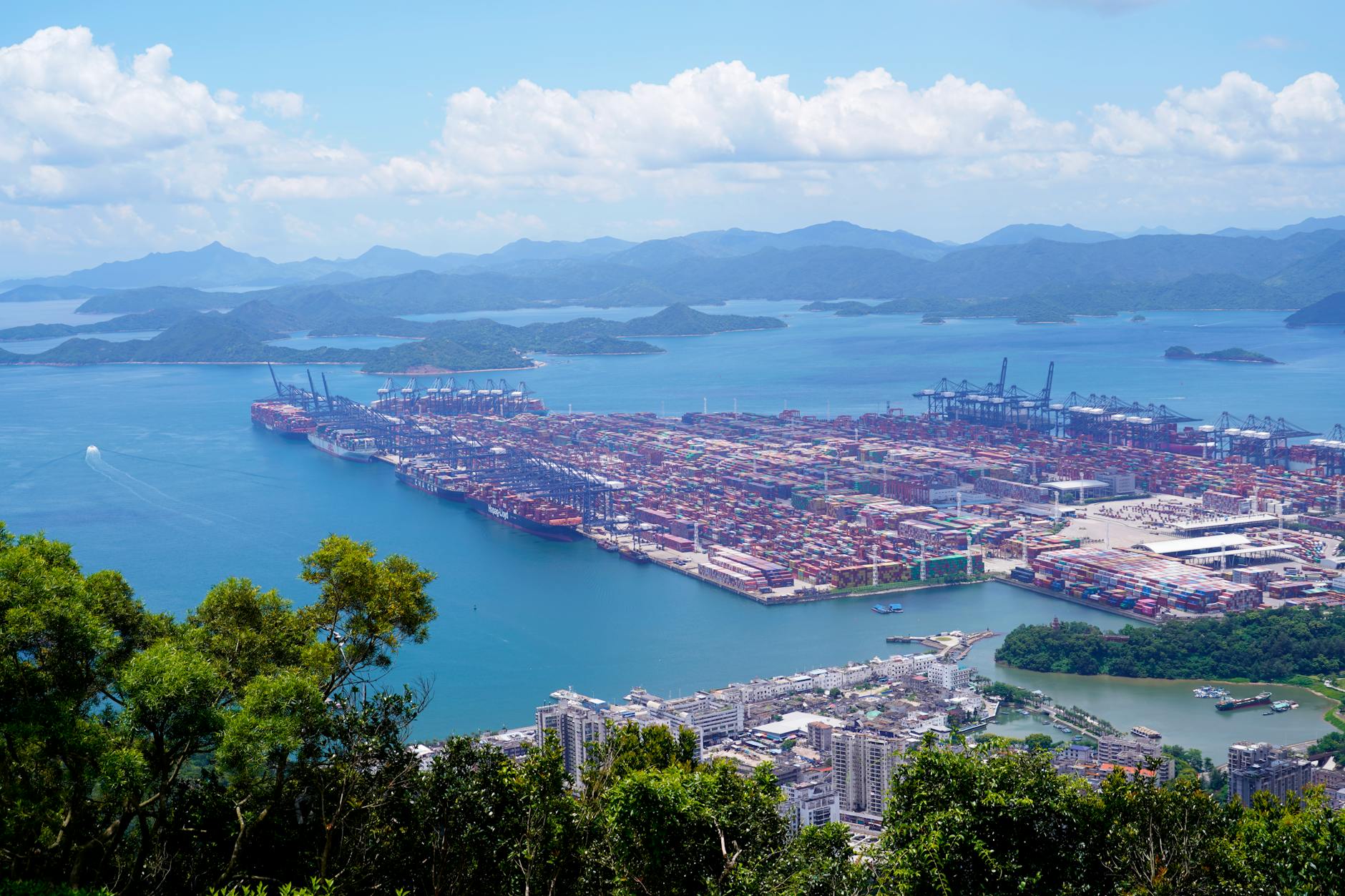
A Bluetooth headphone exporter in Guangzhou noted that companies which relocated to Vietnam during earlier rounds of the trade war are now confronting fresh uncertainty. “They just built the factory,” she said. “Now the tariffs have increased again. The investment feels wasted.”
Factories Falling Silent
On April 7 2025, a factory owner posted a stark video tour of her workshop. Production lines were quiet. Machines stood idle. Orders had dried up.
“This year is going to be incredibly tough,” she said, predicting that her facility would soon close.
In China’s apparel sector, the story is similar. Warehouse shelves are reportedly stacked with thousands of down jackets originally destined for overseas markets. Orders that were expected to sustain operations through the summer have stalled. Even domestic live-streaming sales — once a powerful engine for consumer brands — have failed to offset the decline.
The challenge is twofold. Export orders are shrinking under tariff pressure, while domestic demand remains subdued amid broader economic headwinds. The result, manufacturers say, is a narrowing corridor of survival.
A “Manufacturing Winter”
Leo Ting, the owner of a laser cutting factory, described what she called an approaching “manufacturing winter.” In a recent post, she announced plans to sell her 30,000-watt laser cutting machine — a major capital investment purchased just a year earlier.
She predicted a wave of factory closures, layoffs and legal disputes as struggling owners default on loans or fail to meet contractual obligations. Anxiety, she said, is already widespread. Some small business operators report sleepless nights as they weigh whether to continue operations or cut their losses.
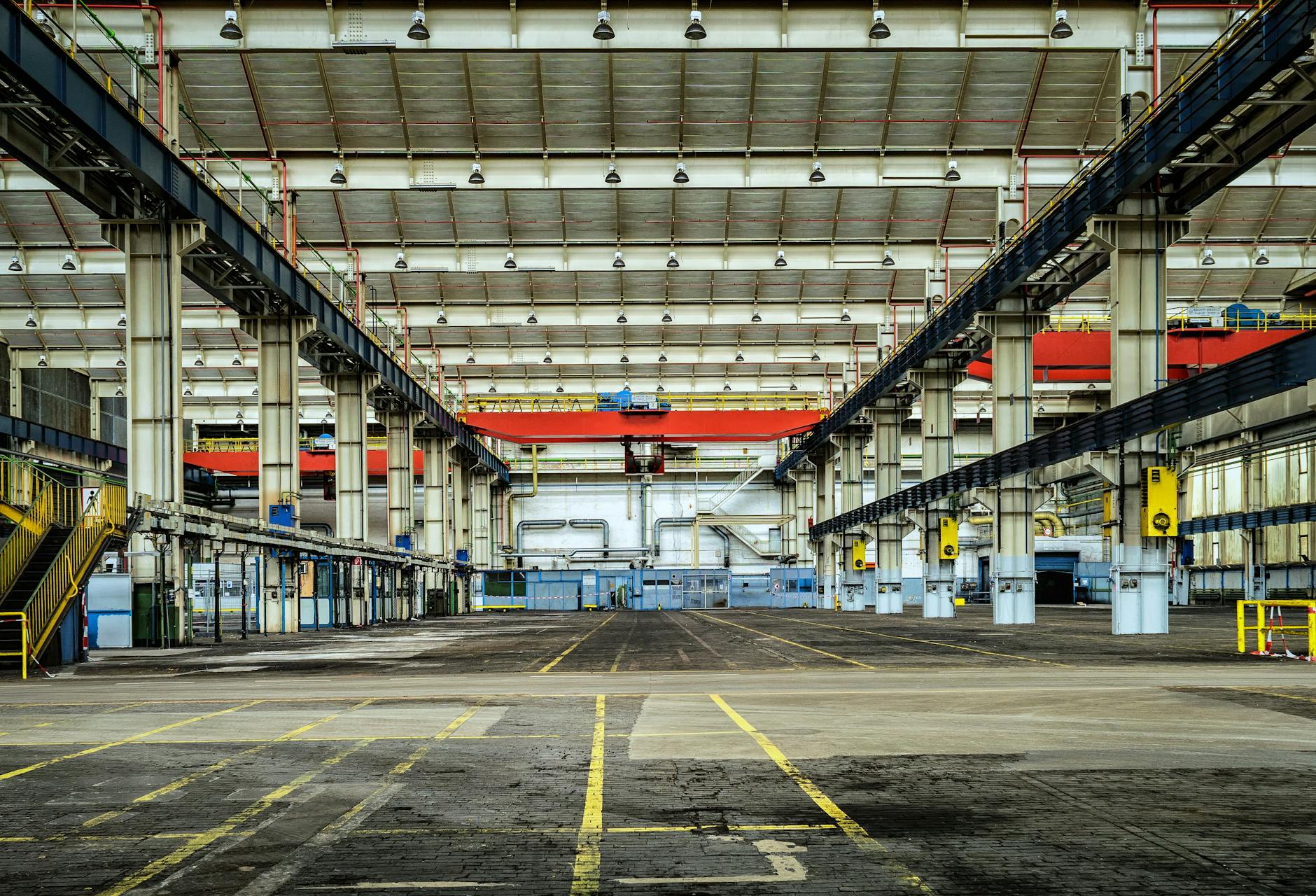
China’s manufacturing sector has long been the backbone of its economic ascent, employing tens of millions and anchoring global supply chains. A broad-based contraction would carry significant social implications.
The Domestic Spillover
Even companies not directly engaged in exports are feeling the strain.
A factory owner in Zhejiang explained that her business serves only the domestic market. Yet her upstream suppliers rely heavily on foreign trade. As their export orders weaken, they are diverting excess capacity into China’s internal market, intensifying competition.
The result is a price war. Margins compress across the supply chain, and previously stable firms find themselves squeezed.
“Everyone’s getting caught in the spiral,” she said. “In the end, we all collapse together.”
Such spillover effects underscore how deeply integrated China’s manufacturing ecosystem has become. A disruption in one segment can cascade across industries.
Ghost Industrial Parks
In Foshan, a TikTok user walked through a newly built factory district once considered prime industrial real estate. The buildings were modern and spacious. But the parking lots were empty.
Intermediaries who previously competed to secure leases have vanished, he said. Renovations have halted as landlords hesitate to invest in properties that may remain vacant.
While isolated examples do not necessarily represent nationwide trends, they reflect a growing perception among some business owners that demand is weakening faster than expected.
A Global Strategy
Trump’s tariff strategy extends beyond China. The European Union faces a 20 percent rate, Taiwan 32 percent, and Vietnam 46 percent under the latest framework. Japan, South Korea and India are also affected.
Supporters of the policy argue that differentiated tariffs are intended to rebalance trade relationships and encourage domestic production in the United States. Critics warn that broad-based tariffs risk fragmenting global supply chains and raising costs for consumers.
What is clear is that the new measures have complicated efforts by Chinese firms to shift production abroad as a hedge against U.S. trade pressure.
Strategic Calculations
Veteran Chinese media commentator Mr. Go has argued that the trade conflict is no longer confined to tariff rates. China’s nearly $300 billion trade surplus with the United States remains a central grievance for Trump, who has consistently framed it as evidence of structural imbalance.
While countries such as Vietnam may seek negotiated settlements, China’s position is more complex. The U.S. market remains crucial to China’s export-driven sectors. Conversely, the United States — with its large and diversified economy — is often viewed as less dependent on Chinese imports, though economists debate the extent of that asymmetry.
Australia-based scholar Li Yuanhua has suggested that while the United States may experience short-term disruptions, its capacity to absorb economic shocks is greater than China’s. He has questioned whether Beijing can manage prolonged economic strain without broader social consequences.
Within China, rare public criticism has emerged. A former deputy director of the Chinese Academy of Social Sciences reportedly argued that retaliatory tariffs could prove self-defeating, advocating instead for unilateral tariff reductions and greater openness. Economist Fu Peng described the reciprocal tariffs as a negotiating tactic designed to increase U.S. leverage — comments that were later censored.
Meanwhile, Gao Dong, chief economist at Everbright Securities, has warned that if negotiations stall, decoupling between the two economies in technology and finance could intensify by mid-year, increasing volatility in capital markets.
State Media vs. Street-Level Sentiment
China’s official newspaper, People’s Daily, has published reassurances that “the sky won’t fall,” emphasizing resilience and policy tools available to stabilize growth.
On the ground, however, many business owners express unease. For them, tariffs are not abstract percentages but line items that determine whether an order proceeds or is cancelled.
An e-commerce entrepreneur in Jiangsu summarized the mood bluntly: “Everyone’s in poverty now. The time of hunger and instability is coming.”
Such statements may reflect personal pessimism rather than macroeconomic inevitability. Yet they reveal the psychological toll of prolonged uncertainty.
Beyond Tariffs
The trade conflict increasingly encompasses technology restrictions, investment screening and financial decoupling. Analysts warn that tariffs may be only one element of a broader restructuring of economic ties between the world’s two largest economies.
If supply chains continue to fragment, companies on both sides will face difficult adjustments. American importers may seek alternative suppliers or pass higher costs to consumers. Chinese exporters may pivot toward emerging markets or domestic consumption, though these transitions take time.
For now, many factories appear caught in limbo — completing existing orders while uncertain whether new ones will arrive.
One granulator producer said clients in Southeast Asia were rushing shipments before tariffs fully took effect. Workers were instructed to prioritize foreign orders above all else.
A commenter beneath the video wrote: “This is the final flurry. Once these orders are done, there won’t be any more.”
A Turning Point for Globalization?
The era of frictionless globalization that defined the early 21st century is being reshaped by geopolitical rivalry. Whether Trump’s tariffs achieve their stated objectives — reducing trade imbalances and revitalizing American industry — remains contested.
What is less debated is that the consequences are already visible in workshops and warehouses across China.
From copper components to down jackets, from laser cutters to empty industrial parks, the strain is tangible. Behind each idle machine is an owner weighing difficult choices: absorb losses, pivot markets, or close doors.
Trade wars are often described in terms of leverage and strategy. But their immediate impact is deeply human — measured in cancelled contracts, deferred wages and sleepless nights.
As policymakers in Washington and Beijing calibrate their next moves, thousands of manufacturers continue to watch the numbers on their spreadsheets — and wonder how much more shock their businesses can withstand.
Don’t forget to like this article if you found it informative, subscribe to our website for more in-depth explorations of global issues, and share it with your friends to help spread awareness. Let us know your thoughts in the comments below. Together, we can make a difference.
If you fancy a visual ride via our video and to witness the comments by the affected business owners, do click on the link: https://rumble.com/v6tm7a7-the-devastating-impact-of-trumps-trade-tariff-on-china.html
 Business Finance Insider
Leave a comment