
Artificial intelligence is no longer just about innovation — it is about power, influence, and the race to shape the future of civilization itself.
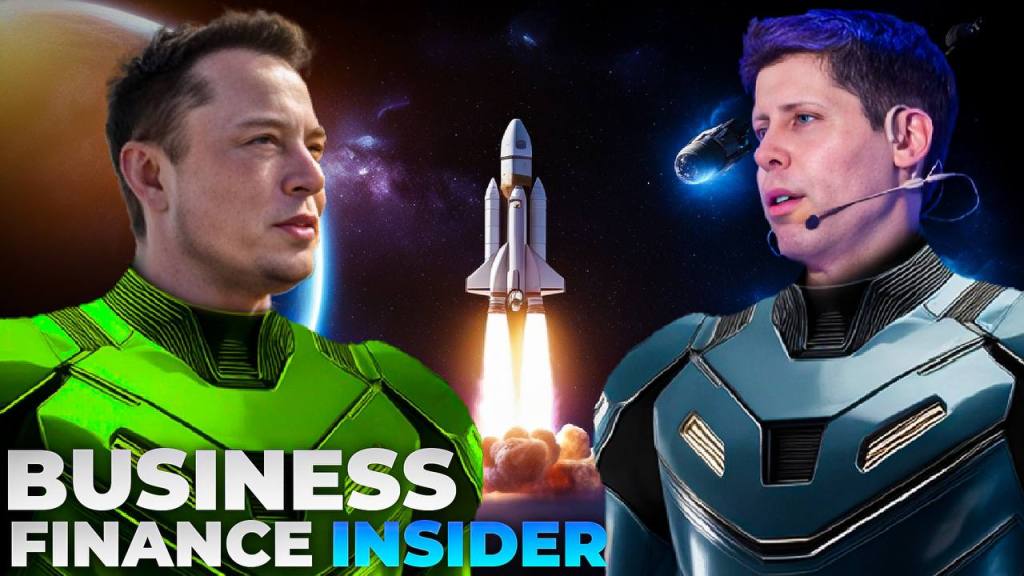
At the center of this high-stakes showdown stand two of Silicon Valley’s most polarizing figures: Elon Musk and Sam Altman.
Their companies — xAI and OpenAI — are no longer collaborators. They are rivals in what has become the defining technological contest of the decade.
On one side stands ChatGPT, the generative AI system that brought artificial intelligence into classrooms, boardrooms, and living rooms around the world. On the other is Grok, Musk’s fast-evolving challenger — irreverent in tone, aggressive in ambition, and increasingly formidable in capability.
This is not merely a product war. It is a clash of philosophies, infrastructure, speed, and control — and the terrain is shifting faster than ever.
The Origins of a Fracture
The rivalry traces back to 2015, when Elon Musk co-founded OpenAI with a mission to ensure artificial intelligence would benefit humanity. The organization was structured as a nonprofit research lab — a counterweight to concentrated AI power inside tech giants like Google.
For several years, Musk and Altman shared that mission. But cracks emerged. Musk grew increasingly vocal about AI’s existential risks, warning that unchecked development could outpace humanity’s ability to govern it.
By 2018, Musk stepped away from OpenAI’s board. The company began pivoting toward a capped-profit model to attract large-scale funding. Altman prioritized scaling and commercialization. Musk favored caution and transparency.
Five years later, Musk launched xAI — not just as a new venture, but as a counterstatement.
The ideological split had become a technological arms race.
OpenAI: From Viral Chatbot to AI Platform Empire
When ChatGPT launched in late 2022, it was a cultural event. The chatbot reached 100 million users within two months — one of the fastest adoption curves in tech history. Suddenly, AI was no longer abstract research. It was writing essays, generating code, summarizing legal documents, and tutoring students.
But OpenAI did not stop there.
Over the past year, the company has rolled out the GPT-5 series, pushing its frontier models deeper into advanced reasoning and multimodal capabilities. GPT-5 introduced improvements in analytical depth, longer context windows, and stronger instruction following. Subsequent refinements — including GPT-5.1 and GPT-5.2 — focused on reasoning accuracy, coding performance, and reducing hallucinations.

Alongside these flagship models, OpenAI released optimized variants such as o3-pro and o4-mini — systems designed to balance cost, speed, and reasoning depth for enterprise deployment. These models allow businesses to integrate high-level AI without absorbing the full computational burden of the most powerful versions.
Behind this rapid evolution stands Microsoft, whose multibillion-dollar partnership with OpenAI provides cloud infrastructure through Azure and embeds GPT systems directly into Word, Excel, and enterprise platforms.
OpenAI is no longer just a chatbot company. It is becoming an AI operating layer for the global workplace.
Altman’s strategy is unmistakable: scale responsibly, iterate relentlessly, and embed AI into everyday human activity.
xAI: The Challenger Accelerates
When Musk founded xAI in July 2023, critics questioned whether it could realistically challenge OpenAI’s head start. That skepticism has faded.
Grok began as a conversational AI integrated into Musk’s social platform X, known for its wit and less filtered tone. But beneath the personality lay a serious technical ambition.
Grok-3 marked a turning point. It introduced stronger reasoning, expanded context capabilities, and API access for developers — signaling that xAI was building not just a chatbot, but an ecosystem.
Then came Grok-4, positioned as a direct competitor to GPT-5. xAI emphasized benchmark gains in math, coding, and logical reasoning. A premium subscription tier targeted power users and developers, while API pricing undercut competitors in a bid to attract enterprise clients.
Beyond text, xAI pushed into multimodal territory. Grok Imagine introduced short-form AI video generation, blending visuals and audio in ways that hinted at Musk’s broader ambitions in media and robotics.
Training these systems requires staggering computational power. Musk assembled one of the largest AI training clusters in the world, deploying tens of thousands of NVIDIA GPUs. The message was clear: speed is strategy.
If OpenAI plays the long institutional game, xAI plays the high-velocity disruption card.
A Philosophical Divide, Sharpened
The Musk-Altman split is not simply corporate rivalry; it is ideological.
Musk frames AI as an existential technology that must be tightly aligned with truth and physical reality. xAI draws on Tesla’s real-world data streams and emphasizes grounding in verifiable systems.
Altman, by contrast, sees AI as a transformative economic engine. OpenAI prioritizes broad accessibility, believing that scaling AI tools empowers society to adapt and innovate.
These worldviews manifest technically. OpenAI leans into internet-scale training and multimodal versatility. xAI leans into real-world data integration and rapid iteration cycles.
The divide raises a fundamental question: Is AI’s future defined by reach or reliability?
The Compute Arms Race
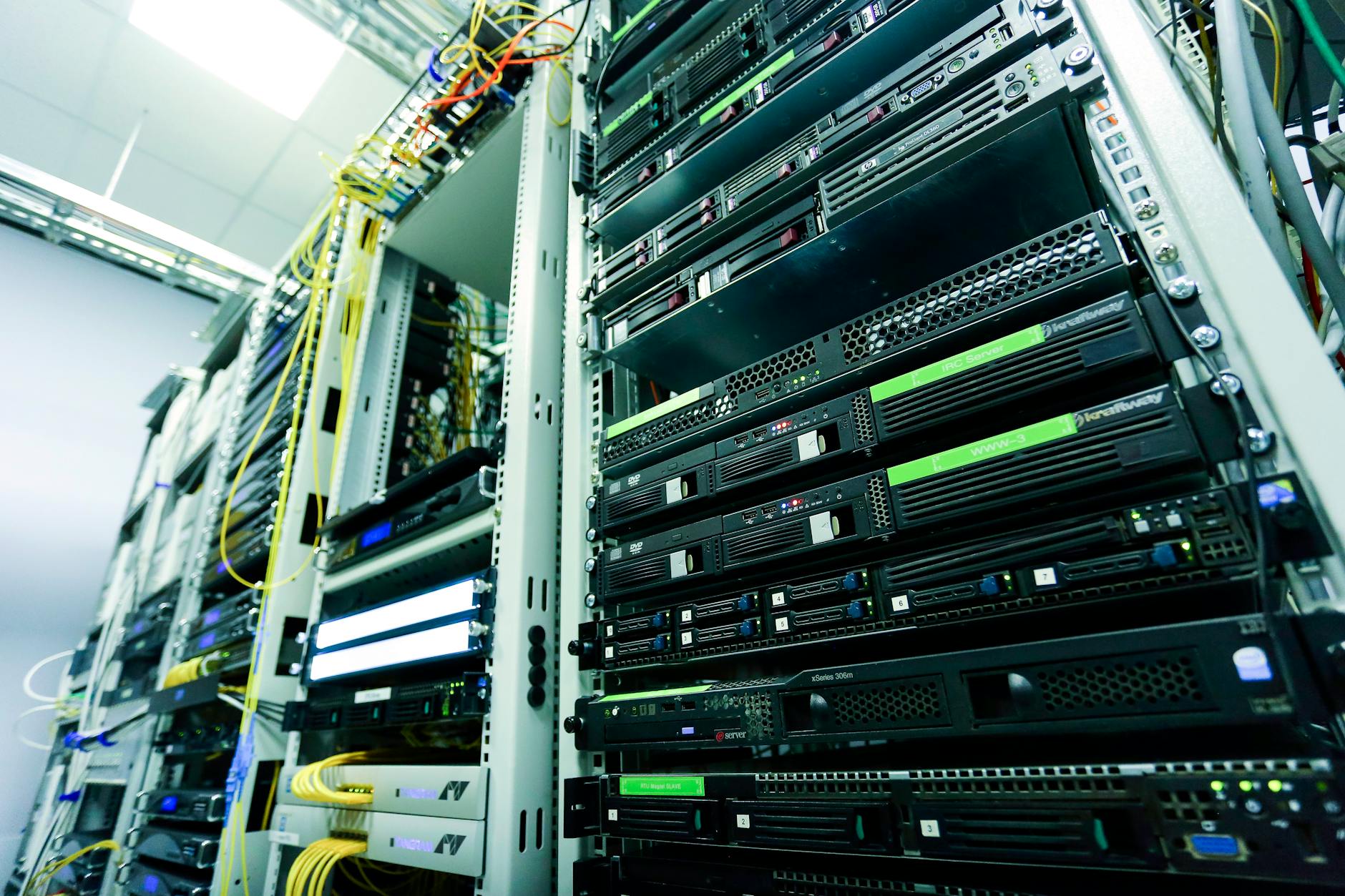
Artificial intelligence today runs on compute — and compute is capital.
OpenAI’s partnership with Microsoft grants access to vast cloud infrastructure. Its models undergo layered safety testing, gradual rollouts, and controlled updates.
xAI, in contrast, moves at breakneck speed. Training cycles are compressed, updates arrive quickly, and model iterations escalate aggressively.
Speed, however, carries risk. Rapid scaling can strain oversight. Recent controversies involving Grok-generated sensitive synthetic media have intensified debates around moderation and responsibility.
Meanwhile, OpenAI faces scrutiny of its own — from regulators concerned about market concentration to critics worried about AI’s influence on information ecosystems.
The race is no longer only about benchmarks. It is about trust.
Multimodal Expansion and the New Frontier
The battle has expanded beyond text.
OpenAI continues to enhance voice interaction, image understanding, and multimodal reasoning within ChatGPT. Enterprises increasingly use AI for data analysis, customer service automation, and internal knowledge systems.
xAI’s expansion into image-to-video generation signals a broader media play, potentially integrating AI directly into content creation pipelines.
Both companies are pushing toward systems that not only respond but reason — models capable of deeper planning, extended memory, and complex problem solving.
The horizon many analysts watch most closely is artificial general intelligence (AGI): systems capable of performing any intellectual task a human can. Both Musk and Altman openly discuss it. Both are racing toward it.
Economic and Societal Shockwaves
The economic implications are enormous. Analysts project AI could add trillions to global GDP over the next decade. Automation will reshape workflows, potentially displacing some roles while creating entirely new categories of work.
OpenAI’s tools already sit inside Fortune 500 workflows. xAI’s ambitions stretch into robotics, autonomous systems, and engineering.
Education, healthcare, logistics — every sector feels the tremors.

But so do policymakers. The European Union’s AI Act and growing U.S. regulatory hearings underscore a reality: AI governance is struggling to keep pace with AI capability.
Collaboration or Collision?
Despite fierce competition, some experts argue that long-term safety may require shared standards. AI systems are growing more powerful, more autonomous, and more integrated into critical infrastructure.
For now, however, competition is the dominant force.
Each new GPT release prompts a Grok counter. Each Grok benchmark claim sparks OpenAI refinement. The rivalry accelerates progress at a pace no single company could sustain alone.
A Crown Still Unclaimed
So who will claim the throne?
OpenAI commands scale, institutional backing, and mainstream adoption. xAI commands speed, vertical integration, and Musk’s relentless appetite for disruption.
The crown remains unclaimed.
But the battle itself is reshaping the global technological order.
In this contest between Grok and ChatGPT, between Musk and Altman, between velocity and institutional scale, one truth stands above all:
The future of intelligence is being written in real time — and the king of AI has yet to be crowned.
If you found this article illuminating, please like and share to keep the conversation going. And don’t forget to subscribe so you never miss our next big story. We’d love to hear your thoughts in the comments: who do you think will win the ultimate AI competition?
If you fancy to immerse yourself in the story via a video, do click on the link:https://rumble.com/v6to2jx-the-battle-for-the-king-of-ai-grok-vs-chat-gpt.html
 Business Finance Insider
Leave a comment