
For more than a decade, the global electric vehicle revolution appeared to have a single undisputed monarch: Tesla. Led by the audacious and outspoken tech billionaire Elon Musk, the company transformed electric cars from quirky environmental experiments into high-performance status symbols.
But the crown is no longer secure.
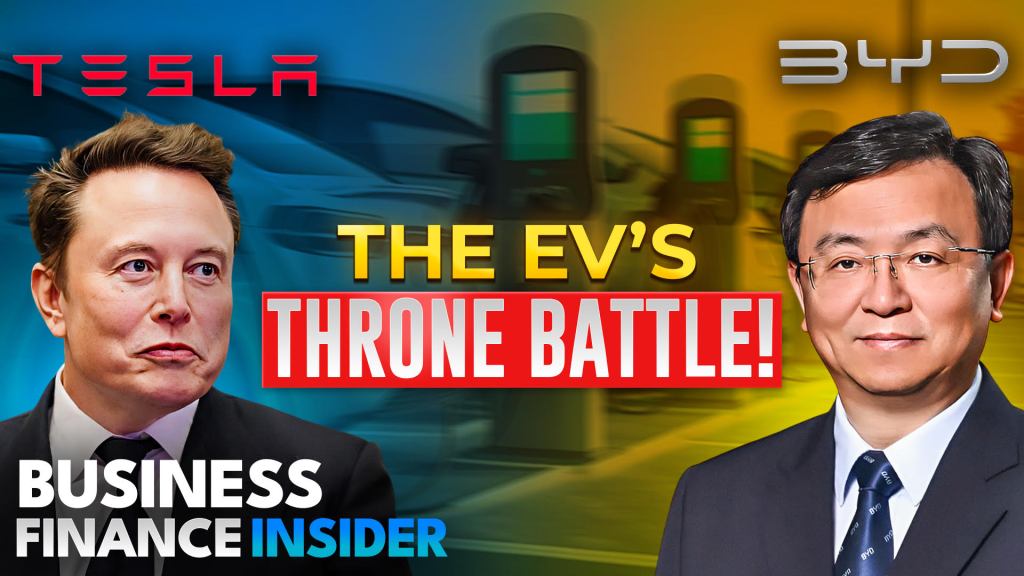
From the factories of China has emerged a formidable rival—BYD, the company led by the relatively understated engineer-turned-entrepreneur Wang Chuanfu. Once dismissed by Musk as an unlikely competitor, BYD has surged in production, innovation, and global reach, challenging Tesla’s dominance in a market that is expanding faster than almost anyone predicted.
Today, the contest between Tesla and BYD is shaping the future of transportation. It is a clash not just between two automakers, but between two business philosophies, two technological strategies, and two visions of how the world will electrify its roads.
The Electric Vehicle Revolution Accelerates
A decade ago, electric vehicles were still viewed as a niche technology. Charging infrastructure was limited, battery costs were high, and most consumers doubted whether EVs could compete with gasoline-powered cars.
That perception has changed dramatically.
Government mandates to reduce carbon emissions, rapid improvements in battery technology, and massive investments by automakers have pushed EVs into the mainstream. Global electric vehicle sales have climbed into the millions each year, and in several markets—including parts of Europe and China—EV adoption is accelerating toward majority market share.
In this rapidly evolving landscape, Tesla once stood virtually alone as the global leader.
Founded in 2003, Tesla redefined what electric vehicles could be. Instead of focusing on small, utilitarian models, the company launched sleek, high-performance vehicles like the Roadster and the Model S. These cars demonstrated that EVs could be fast, luxurious, and technologically advanced.
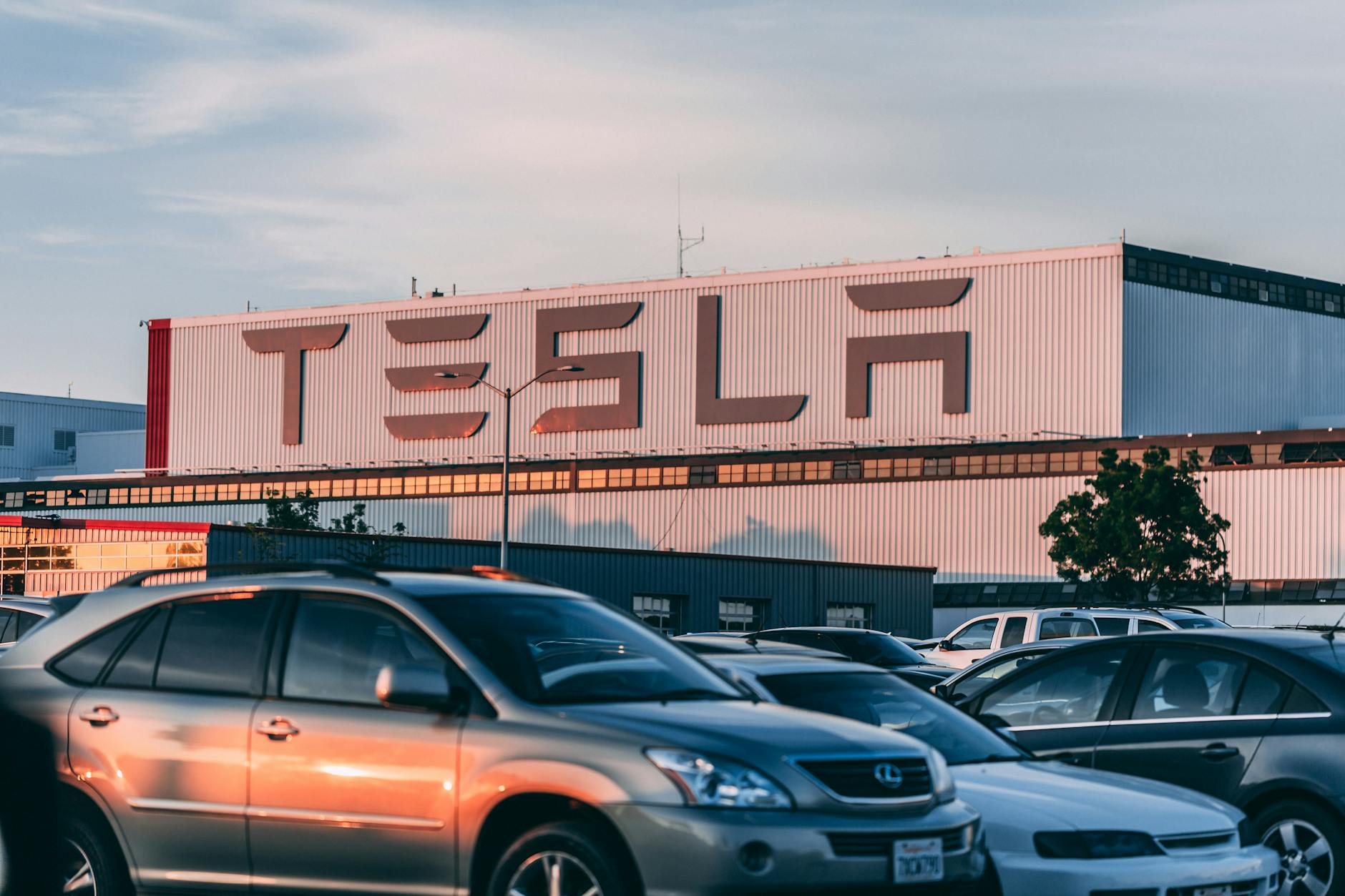
Tesla’s strategy combined cutting-edge software, over-the-air updates, and a proprietary charging network that became a key advantage for the brand. The company’s vehicles—from the Model 3 sedan to the Model Y crossover—developed an almost cult-like following among drivers.
For years, Tesla appeared untouchable.
Then BYD arrived on the global stage.
From Battery Maker to Automotive Powerhouse
Long before it became a household name in electric vehicles, BYD was something else entirely: a battery manufacturer.
Founded in 1995 by Wang Chuanfu, the company initially focused on producing rechargeable batteries for mobile phones and electronics. Its early success came from mastering cost-efficient manufacturing and scaling production rapidly.
But Wang saw a much larger opportunity.
In the early 2000s, BYD began expanding into electric vehicles, applying its deep expertise in battery technology to automotive design. While Tesla was capturing global headlines with luxury EVs, BYD focused on building affordable vehicles for mass adoption.
That strategy proved powerful.
Over time, BYD expanded into a wide range of electric transportation—from passenger cars to buses and commercial fleets. Its electric buses began appearing in cities across Europe, Latin America, and Asia, quietly establishing the company as a major global supplier of electric mobility solutions.
By the early 2020s, BYD had evolved into one of the world’s largest EV manufacturers.
The Buffett Bet That Paid Off
One of the most important early endorsements of BYD came from the investment world.
In 2008, legendary investor Warren Buffett, guided by his longtime partner Charlie Munger, invested hundreds of millions of dollars in BYD through Berkshire Hathaway.
Munger, known for his blunt assessments, became one of the company’s most enthusiastic advocates. He frequently praised Wang Chuanfu as a visionary entrepreneur and highlighted BYD’s extraordinary manufacturing capability.
Over the years, the investment proved remarkably successful as BYD’s valuation soared along with the global EV boom.
For Munger, BYD represented something unusual in the auto industry: a company that controlled nearly every aspect of its supply chain.
The Power of Vertical Integration
One of BYD’s greatest competitive advantages lies in its vertically integrated business model.
Unlike many automakers that rely heavily on outside suppliers, BYD produces many of its key components in-house, including batteries, semiconductors, and power electronics.
This strategy allows the company to reduce costs, control supply chains, and scale production more quickly than competitors.
Tesla has pursued a similar approach in recent years, building massive gigafactories and developing proprietary battery technologies. Yet BYD’s integration runs particularly deep, reflecting its origins as a battery manufacturer.
The result is a production system designed for efficiency and scale.
And that scale has translated into explosive growth.
The Price Advantage
Perhaps the most dramatic difference between Tesla and BYD lies in pricing.
Tesla vehicles typically occupy the mid-to-premium segments of the market. Even its more affordable models often start around $40,000 in many regions, with higher-end vehicles exceeding $100,000.
BYD, by contrast, has focused heavily on affordability.
Several of its models in China start in the $10,000–$15,000 range—prices that bring electric vehicles within reach of a much broader segment of consumers.
This strategy has enabled BYD to capture massive sales volumes, particularly in China, the world’s largest EV market.
Lower costs are made possible by several factors:
- Vertical integration
- Lower manufacturing costs
- Large-scale production
- Access to domestic supply chains
For consumers, the result is a rapidly expanding array of electric vehicles at increasingly competitive prices.
For Tesla, it means intensifying pressure.
The Battery Technology Arms Race
At the heart of the EV competition lies battery technology.
For years, Tesla focused on high-energy-density battery chemistries such as Nickel-Cobalt-Aluminum (NCA). These batteries enabled longer driving ranges but often came with higher costs.
BYD took a different approach.
The company pioneered lithium iron phosphate batteries, commonly known as LFP batteries. While slightly less energy-dense, they are cheaper, more durable, and considered safer under extreme conditions.
BYD’s signature innovation—the Blade Battery—has become one of the company’s defining technologies. Designed for improved safety and efficiency, it allows manufacturers to build more affordable EVs without sacrificing reliability.
Interestingly, Tesla itself has begun adopting LFP batteries in some vehicles produced in China, highlighting how the industry’s technological lines are beginning to blur.
Both companies are investing billions into research aimed at improving battery performance, reducing costs, and potentially developing next-generation technologies such as solid-state batteries.
The outcome of this technological race could shape the EV industry for decades.
Government Policy and the EV Boom
Another factor shaping the Tesla-BYD rivalry is government policy.
China has aggressively promoted electric vehicles through subsidies, tax incentives, and regulatory measures aimed at reducing gasoline car usage.
These policies have helped domestic companies like BYD scale production rapidly while building a large home market.
In many Chinese cities, restrictions on gasoline vehicle registrations have pushed consumers toward electric alternatives. Combined with government support for charging infrastructure and battery development, these policies have created fertile ground for EV manufacturers.
Tesla has also benefited from incentives in various markets, including the United States and Europe. However, China’s industrial policy has provided particularly strong support for domestic EV manufacturing.
That support has not gone unnoticed abroad.
Regulators in Europe and the United States have begun investigating potential subsidies and considering tariffs on imported Chinese EVs, reflecting rising geopolitical tensions around the industry.
Global Expansion
As the EV race intensifies, both Tesla and BYD are expanding far beyond their home markets.
Tesla has built major production facilities in the United States, China, and Germany, allowing it to serve multiple continents with localized manufacturing.
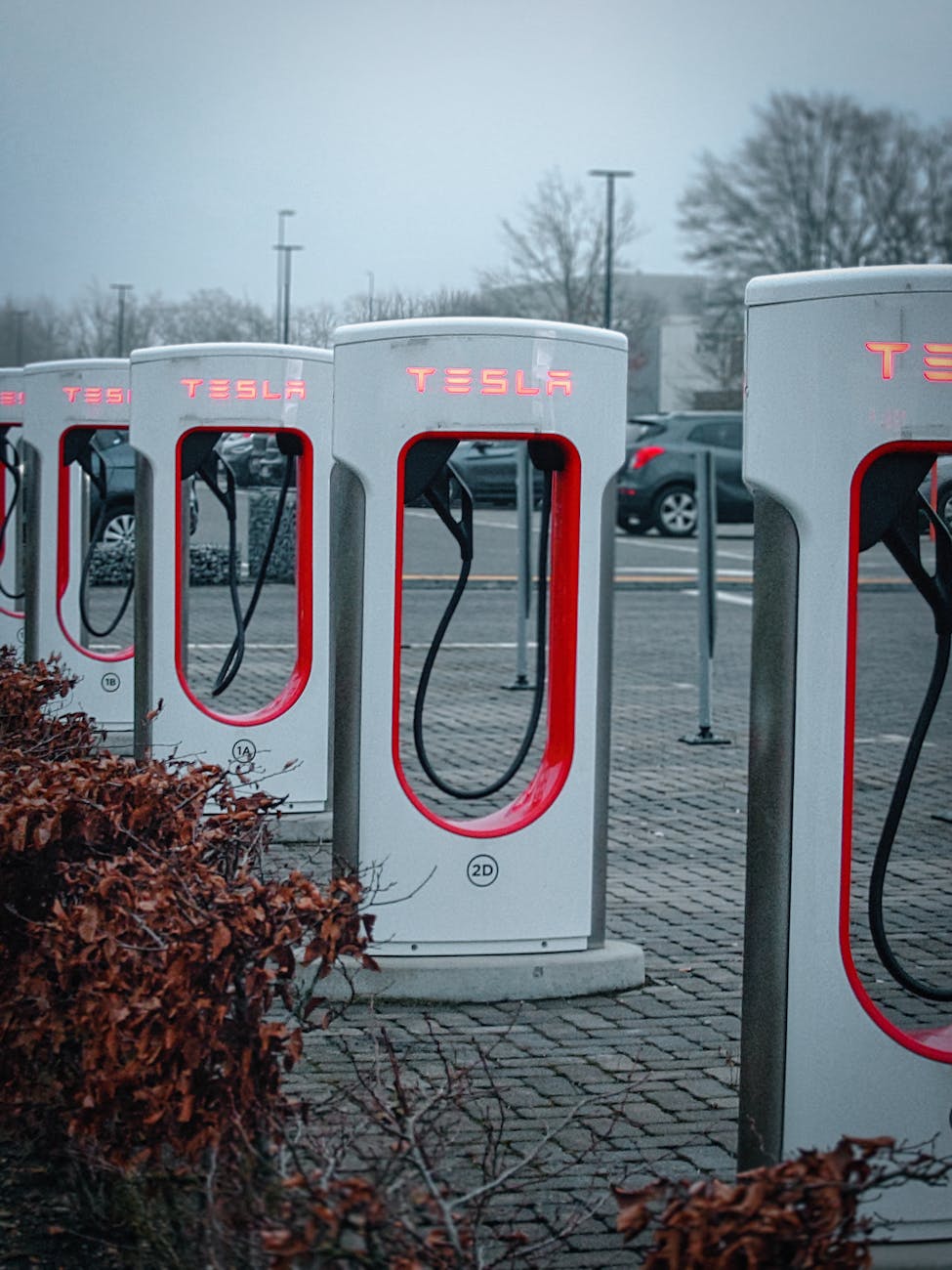
Its global brand recognition and extensive Supercharger network have helped maintain strong customer loyalty.
BYD, meanwhile, is accelerating its international ambitions.
The company has expanded vehicle exports to Europe, Southeast Asia, Latin America, and Australia. It is also building manufacturing facilities abroad, including new plants in Europe designed to bypass potential import tariffs.
In addition to passenger vehicles, BYD’s electric buses and taxis have become increasingly common in cities worldwide.
This global expansion signals that the rivalry between Tesla and BYD is no longer confined to China or the United States. It is becoming a truly global contest.
Trade Barriers and Geopolitical Risks
Despite their growth, both companies face significant geopolitical challenges.
The United States maintains tariffs on Chinese-made vehicles that make it difficult for BYD to enter the American passenger car market directly. Meanwhile, European regulators are examining Chinese EV imports amid concerns over state subsidies.
Tesla, although American, also faces challenges abroad.
China—one of Tesla’s largest markets—is home to hundreds of domestic EV brands competing fiercely on price. As competition intensifies, Tesla has repeatedly cut prices in China to maintain sales momentum.
Trade tensions, supply chain disruptions, and access to critical battery materials could all reshape the competitive landscape.
The EV industry depends heavily on resources such as lithium, nickel, and cobalt—materials that are increasingly central to global economic and political strategy.
Who Will Wear the Crown?
The rivalry between Tesla and BYD has become one of the defining contests of the modern automotive era.
Tesla remains a technological pioneer. Its strengths lie in software, autonomous driving development, brand prestige, and an extensive charging network.
BYD’s advantages lie elsewhere: manufacturing scale, vertical integration, competitive pricing, and strong domestic market support.
Rather than a simple winner-takes-all battle, the EV market may ultimately support multiple dominant players.
Tesla could maintain leadership in premium and technology-focused segments, while BYD expands rapidly in the mass-market category.
Both companies are also pursuing new models aimed at expanding their reach. Tesla is reportedly working on a more affordable vehicle platform, while BYD continues launching new models across multiple price tiers.
In the end, the real winners may be consumers.
The fierce competition between these two giants is accelerating innovation, driving down costs, and pushing electric vehicles toward mainstream adoption faster than anyone imagined.
What began as a niche experiment has become one of the most important industrial transformations of the 21st century.
And at the center of it all stands a rivalry between two ambitious leaders—Elon Musk and Wang Chuanfu—each determined to shape the future of transportation.
The race for the electric vehicle crown is far from over. If anything, it has only just begun.
Don’t forget to like this article if you found it informative, subscribe to our website for more in-depth explorations of EV growth, and share it with your friends to help spread awareness. Let us know your thoughts in the comments below.
Click on the video link below for a visual journey of the EV competition: https://rumble.com/v6u2h2v-the-battle-for-the-king-of-ev-elon-musks-tesla-vs-wang-chuanfus-byd.html
 Business Finance Insider
Leave a comment