
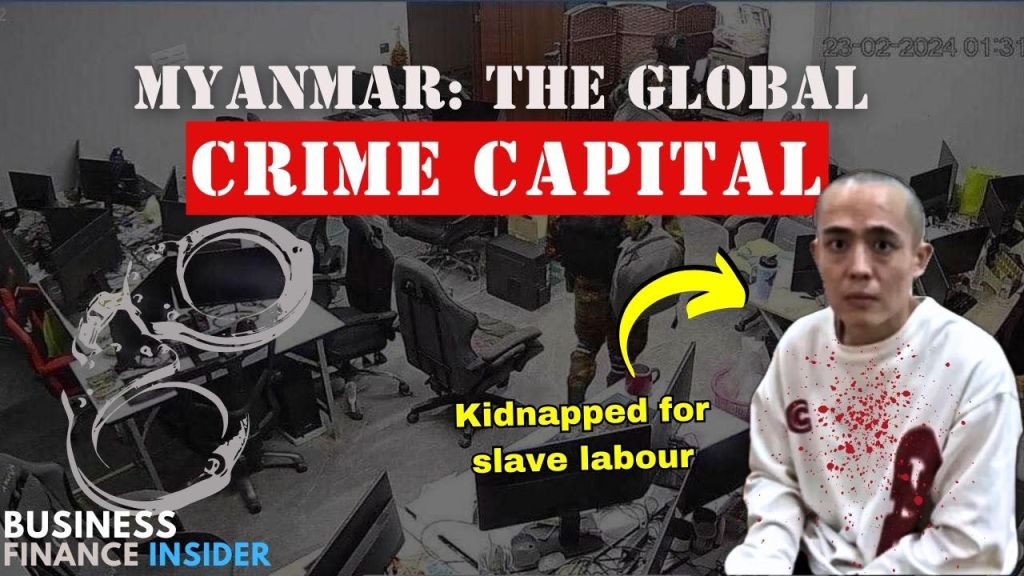
In January 2025, Chinese actor Wang Xing was lured to Thailand with a fake film job offer, only to be kidnapped and trafficked to Myanmar. His harrowing ordeal captured global attention and led to the cancellation of a high-profile concert by Hong Kong’s beloved singer, Eason Chan Yick-shun. Eason Chan cancelled his Bangkok performance, scheduled for February 22 2025, expressing deep concerns for the safety of his Chinese fans travelling to Thailand. This chilling incident is a stark reminder of why Myanmar has become the global crime capital today. From drug trafficking and online scams to the exploitation of natural resources, we’ll uncover the factors fueling this crisis, explore its devastating impact on the people of Myanmar, and discuss concrete solutions being implemented to combat these challenges. Trust me, this is a story you won’t want to miss.
The Golden Triangle’s Resurgence
For decades, Myanmar has been at the heart of the infamous Golden Triangle, a region notorious for opium production. This isn’t just a modern issue; it’s rooted deep in Myanmar’s history, fueling conflicts for generations. The lure of quick money and limited economic opportunities keep communities stuck in this vicious cycle.
But things have changed. Myanmar isn’t just pumping out heroin anymore; it’s now a major player in synthetic drugs like methamphetamine, ketamine, and fentanyl, flooding markets worldwide. These drugs are easier to produce and distribute, making them a goldmine for criminal networks. Rampant addiction and escalating violence both inside Myanmar and beyond its borders.

What’s driving this resurgence? It’s a tangled web of poverty, corruption, and political instability. We’re talking billions of dollars changing hands, enriching criminal syndicates and corrupt officials alike. The drug trade isn’t just a problem. It’s a powerhouse that’s further destabilizing the entire region.
The Coup: A Catalyst for Chaos
But there’s a bigger catalyst driving Myanmar deeper into chaos than just the drug trade: the seismic shift in its political landscape.
Remember the 2021 military coup? It wasn’t just a political shake-up. It plunged Myanmar into deeper chaos, opening doors for criminal enterprises to thrive. The military’s takeover shattered the fragile peace and democracy Myanmar was inching toward. Suddenly, violence and repression skyrocketed, and the country was thrown into turmoil.
This coup didn’t just topple the government; it weakened law enforcement and created a power vacuum. With the government struggling to maintain control and resources being diverted to suppress dissent, criminal networks found the perfect storm to operate freely.
Criminal networks expanded their reach and influence with little to no resistance. Ordinary people found themselves caught in the crossfire, facing violence, displacement, and economic hardship. The coup didn’t just create a political crisis – it fueled the growth of organized crime, turning Myanmar into a breeding ground for illicit activities.
Rare Earth: A Resource Curse
While political turmoil sets the stage, Myanmar’s natural wealth tells a darker story of exploitation and environmental devastation.
Myanmar isn’t just about drugs and political unrest, it’s also a major source of rare earth elements essential for modern technology. Think smartphones, electric vehicles, and solar panels. These elements are highly valuable on the global market, but their extraction has opened the door to new criminal exploits.
Much of these extractions are illegal and wreaks havoc on the environment. Mining operations are decimating forests, polluting waterways, and displacing communities. The environmental damage are often irreversible, leaving behind scars that may never heal.
And where’s all the money from this trade going? Straight into the hands of criminal groups and military-linked businesses. These illicit activities aren’t just about making money; they fuel corruption and further destabilize the region. It’s the classic “resource curse”: instead of fostering development, these resources are sparking conflict and corruption.
Scams: The New Frontier
As if the physical and political landscapes weren’t enough, the digital frontier has opened new avenues for Myanmar’s criminal networks.
Welcome to the digital age, where Myanmar’s criminal landscape has evolved yet again. Online scams have become a major player, with sophisticated operations run by transnational criminal networks targeting victims worldwide.
These scams are getting smarter, using social engineering and advanced technology to trick unsuspecting individuals. From romance fraud to fake investment schemes, millions of dollars are being siphoned off from people’s life savings.
But it doesn’t stop there. Human trafficking is intertwined with these scam operations. People are being forced into these schemes, held captive, abused, and made to work long hours in scam centers. They were promised high-paying jobs but ended up trapped in a nightmare of exploitation.
One high-profile case involves Wang Xing, a 31-year-old Chinese actor who was duped into traveling to Thailand for a film job and then trafficked to Myanmar. His ordeal drew national and international attention, highlighting the pervasive nature of these scam centers.
The case also led to significant repercussions in the entertainment industry. Famous Hong Kong singer Eason Chan Yik-shun cancelled his concert in Bangkok, scheduled for February 22 2025, expressing deep concerns for the safety of his Chinese fans traveling to Thailand. Organiser Sunfan Media Group cited safety issues related to Chinese citizens and fans, further highlighting the widespread fear caused by these criminal networks.
The Casino Kingdoms: A Breeding Ground for Crime
But the web of crime in Myanmar doesn’t stop here. From casinos to corruption, each layer intertwines to create a formidable network of illicit activities.
Along Myanmar’s borders, sprawling casino complexes have sprung up, catering to gamblers from across the region. These casinos are not just places of entertainment but also hubs for money laundering and other illicit activities. Operating in a legal grey area, they often receive protection from corrupt officials.

These casino kingdoms symbolize the unchecked power of organized crime in Myanmar. They represent a significant challenge to law enforcement efforts. The profits generated by these casinos often fuel other criminal activities, creating a vicious cycle of corruption and violence.
The presence of these casinos not only attracts criminal elements but also has a negative social impact on local communities. Issues such as gambling addiction, increased crime rates, and environmental degradation are often associated with these establishments. The unchecked growth of these casinos poses a serious threat to the well-being of the people of Myanmar.
The Web of Corruption: Fueling the Fire
And while casinos may seem like glamorous hotspots, there’s a darker thread weaving through Myanmar’s fabric: corruption.
Corruption is the lifeblood of organized crime in Myanmar. It permeates all levels of society, from local officials to high-ranking government figures. This corruption enables criminal networks to operate with impunity, shielding them from prosecution. The rule of law has been eroded, and public trust has been shattered.
This corruption undermines all efforts to combat crime and promote development. It creates a system where the powerful are above the law and where ordinary people are left vulnerable to exploitation. Breaking this cycle of corruption is crucial to addressing the root causes of organized crime in Myanmar.
The fight against organized crime in Myanmar must include a concerted effort to tackle corruption. This requires strengthening anti-corruption institutions, promoting transparency and accountability, and ensuring that those in power are held responsible for their actions.
Ethnic Armed Groups: A Complex Web
Myanmar’s diverse ethnic landscape plays a significant role in the rise of organized crime. Numerous ethnic armed groups control territories along the borders, engaging in drug trafficking, illegal logging, and other illicit activities. These groups have been fighting for autonomy and resources for decades, and their involvement in criminal activities only adds more complexity to the situation.
These groups often operate independently, making it tough for the central government to exert control. With the lack of authority in these border regions, criminal networks find a safe haven to operate. The ongoing conflicts between the military and these groups further destabilize the region, creating fertile ground for criminal enterprises to flourish.

The relationships between various ethnic armed groups, the military, and criminal syndicates are tangled and filled with alliances and rivalries. Understanding these dynamics is crucial if we want to tackle the root causes of organized crime in Myanmar. And to make matters even more complicated, external actors are also getting involved, looking to exploit the region’s
The International Connection: A Globalized Crime Problem
Amidst the chaos and corruption, Myanmar’s criminal activities are not confined within its borders.
Myanmar’s criminal activities have a global reach, impacting countries around the world. Transnational crime networks are involved in drug trafficking, human trafficking, and other illicit trades. These networks operate across borders, making it challenging for law enforcement agencies to track them down.
These networks leverage globalized financial systems, exploiting loopholes and vulnerabilities in international regulations. The illicit proceeds of these crimes are often laundered through complex financial schemes, making it difficult to trace their origins. This globalized nature of crime requires international cooperation to effectively combat it.
International cooperation is essential to combat organized crime in Myanmar. This includes sharing intelligence, coordinating law enforcement operations, and providing assistance to Myanmar’s neighbors. Only through a concerted global effort can we effectively dismantle these transnational criminal networks.
The Human Cost: Scars of Crime
The human cost of organized crime in Myanmar is staggering. Drug addiction is tearing families apart and ruining lives. Cheap, readily available drugs, combined with poverty and limited opportunities, have created a public health crisis. Communities are being torn apart by widespread drug use, eroding the social fabric that holds them together.
And it’s not just drugs. Victims of scams face financial ruin and emotional trauma. Imagine losing your life savings and feeling utterly helpless. The psychological impact? Profound. We’re talking depression, anxiety, even suicide. These heartbreaking stories highlight just how devastating these crimes can be.
But it gets worse. People displaced by conflict are facing unimaginable hardships. They’ve lost their homes, livelihoods, and communities. Living in squalid conditions, they lack access to basic necessities like food, water, and healthcare. It’s a vicious cycle of violence and poverty that traps generations in despair.
The Thailand-Myanmar Conflict
The recent tensions between Thailand and Myanmar are not the result of a direct war between the two countries, but rather the spill-over effects of Myanmar’s ongoing civil war following the 2021 military coup. Fighting between Myanmar’s military junta and ethnic armed groups, particularly in eastern regions such as Karen (Kayin) State, has intensified near the Thai border. As clashes escalated, artillery shells, drone activity, and air operations from the Myanmar side have occasionally crossed close to or into Thai territory, raising serious security concerns for Bangkok.
In response, Thailand has taken a series of precautionary measures to protect its sovereignty and civilians. Several border crossings were temporarily closed, Thai forces were placed on high alert, and fighter jets were scrambled after unidentified aircraft were detected near the border. At the same time, Thailand has had to manage humanitarian consequences, as hundreds of civilians, ethnic fighters, and even Myanmar soldiers fled across the border to escape the fighting. Thai authorities disarmed combatants, provided emergency assistance, and coordinated temporary shelter for displaced civilians.
These border tensions are deeply tied to Myanmar’s wider political crisis and regional diplomatic failures. The military’s attempts to legitimize its rule through tightly controlled elections have been widely rejected by ASEAN and the international community, while ASEAN’s peace framework has struggled to curb the violence. As Myanmar’s conflict grinds on, Thailand remains caught in the middle – balancing border security, humanitarian responsibilities, and regional stability – highlighting how internal wars can easily become cross-border crises in Southeast Asia.
A Call for Change
But hope is not lost. A call for change is rising from the ashes of despair.
The situation in Myanmar is dire, but it’s not hopeless. There are glimmers of hope, signs that the people of Myanmar are not giving up. They are demanding change, calling for democracy and human rights. Their courage and resilience are an inspiration to the world.
The international community, especially Asean, must step up and do more to support them. This includes imposing targeted sanctions on those responsible for human rights abuses and supporting civil society organizations working to promote democracy and the rule of law. We must hold those accountable who are perpetrating these crimes. We must support those who are working to build a better future for Myanmar.
The future of Myanmar depends on it. It depends on our collective action. We must not turn a blind eye to the suffering of the people of Myanmar. We must stand in solidarity with them and demand an end to the violence and corruption. We must work together to create a world where peace and justice prevail.
Myanmar’s descent into becoming a global crime capital is complex and tragic. It’s a story that should concern us all because what happens in Myanmar has ripple effects across the world. We hope this article has shed some light on what is happening in the Indo-China region.
Don’t forget to like this article if you found it informative, subscribe to our website for more in-depth explorations of global issues, and share it with your friends to help spread awareness. Let us know your thoughts in the comments below.
If you fancy a more exciting ride through this part of Indo-China and hearing from the players, do click on the link below to our video:
https://rumble.com/v6uf9od-myanmar-the-global-crime-capital.html
 Business Finance Insider
Leave a comment