
The Day Wall Street Panicked
It was the kind of trading day that leaves Wall Street veterans staring silently at their screens.
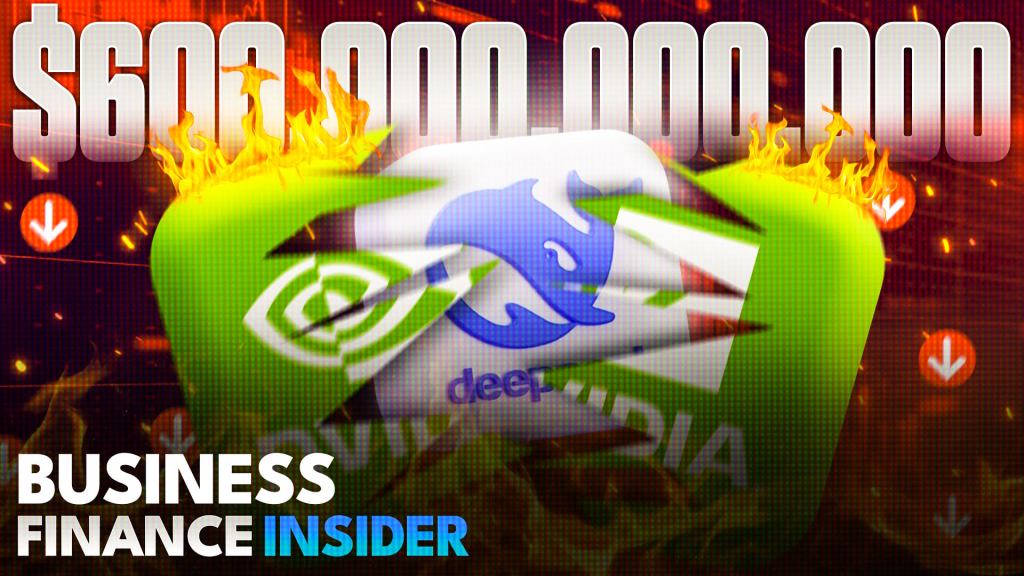
In a stunning market rout, chipmaking giant Nvidia lost nearly $600 billion in market value in a single day, marking one of the largest one-day corporate losses in financial history. Investors panicked, the Nasdaq plunged, and technology stocks across the globe tumbled in sympathy. What triggered the chaos was not a recession, a war, or a banking collapse. It was a little-known Chinese artificial intelligence startup called DeepSeek.
Almost overnight, DeepSeek transformed from a relatively obscure AI firm in Hangzhou into the company that shook the foundations of the global technology sector. Its breakthrough was simple but terrifying for Silicon Valley: the company claimed it could build advanced AI models at a fraction of the cost spent by American competitors.
Nvidia’s AI Empire Under Threat
For years, the AI race had been dominated by a handful of U.S. tech giants with seemingly unlimited resources. Companies poured billions into specialized chips, data centers, and research teams, believing that bigger spending guaranteed superiority. Nvidia became the greatest beneficiary of that belief. Its graphics processing units, or GPUs, became the gold standard powering the AI revolution, turning the company into one of the most valuable corporations in the world.
Then came DeepSeek.
The startup unveiled DeepSeek R1, an advanced generative AI model that many analysts compared favorably with leading Western systems. What stunned investors was not only the model’s performance, but the cost behind it. DeepSeek reportedly developed its system with an investment of just $5.6 million — a tiny fraction of the billions being spent by companies such as OpenAI, Google, and Meta Platforms.
The Market Meltdown Begins
The implications were immediate and brutal.
If advanced AI models could truly be developed without massive amounts of expensive hardware, then the entire investment thesis supporting Nvidia’s meteoric rise suddenly looked vulnerable. Investors began questioning whether companies would continue spending aggressively on premium AI chips if cheaper alternatives could achieve similar results.
The selloff spread rapidly. Shares of chipmakers including Broadcom and ASML Holding also declined sharply as fear rippled through the semiconductor sector. The Nasdaq dropped more than 3 percent, reflecting growing anxiety that the AI boom might be entering a new and unpredictable phase.
The Man Behind DeepSeek
At the center of the storm was DeepSeek founder Liang Wenfeng, a technology entrepreneur with roots in both finance and artificial intelligence. Born in 1985, Liang studied AI and engineering before entering the world of quantitative finance. In 2015, he co-founded High-Flyer, a hedge fund that used mathematical models and AI-driven trading strategies to manage billions in assets.
That success provided both the capital and expertise needed to launch DeepSeek in 2023.
Unlike many Western AI companies that guard their technology behind closed doors, DeepSeek embraced an open-source strategy. By making its models publicly accessible, the company encouraged developers and researchers worldwide to improve and build upon its systems. The move accelerated innovation while dramatically lowering barriers to entry.
How DeepSeek Changed the Rules of AI
In many ways, DeepSeek’s rise represents a philosophical challenge to Silicon Valley itself.

For years, the dominant assumption in the tech industry was that AI progress depended on scale: larger data centers, more computing power, and billions of dollars in infrastructure. DeepSeek instead demonstrated the power of efficiency. Rather than relying purely on brute-force computing, the company adopted what is known as a “mixture of experts” architecture, breaking tasks into specialized components that could work more efficiently.
The strategy reduced computational demands and allowed the company to maximize performance while minimizing costs.
Beating Restrictions Through Innovation
Even more surprising was how DeepSeek navigated American export restrictions. The United States had imposed controls limiting China’s access to Nvidia’s most advanced AI chips, particularly the highly coveted H100 GPUs. Yet DeepSeek reportedly trained its models using less powerful alternatives such as the H800 chip.
To many observers, this was a wake-up call.
Instead of slowing Chinese AI development, export restrictions may have encouraged firms like DeepSeek to innovate more creatively. Critics of U.S. policy argue that technological barriers can sometimes accelerate domestic innovation rather than suppress it. DeepSeek’s breakthrough now raises difficult questions about whether America’s strategy to maintain AI dominance is working as intended.
Nvidia’s Fight to Stay on Top
Meanwhile, Nvidia faces a defining moment.
The company still commands enormous advantages in hardware performance, software ecosystems, and customer relationships. Its chips remain deeply embedded in the infrastructure of modern AI systems. However, the DeepSeek shock exposed how fragile investor confidence can become when a disruptive challenger appears.
To maintain its dominance, Nvidia is expected to double down on next-generation GPU development while expanding its broader AI ecosystem. The company is increasingly focused not just on hardware sales, but on integrated AI platforms, cloud partnerships, and software tools that lock customers into its ecosystem.
In essence, Nvidia must prove that its value extends beyond raw computing power alone.
The New Cold War in Artificial Intelligence
The broader significance of the Nvidia-DeepSeek saga extends far beyond stock prices. It highlights the intensifying technological rivalry between the United States and China, a competition increasingly centered on artificial intelligence.

China’s approach emphasizes affordability, rapid deployment, and scalability. The United States, by contrast, continues to rely on massive investment, advanced hardware, and a powerful startup ecosystem. Both strategies are producing remarkable breakthroughs, but DeepSeek’s rise suggests that the future of AI may not belong exclusively to the companies with the deepest pockets.
Open Source vs Proprietary AI
The battle between open-source and proprietary AI models is also becoming more important. Open-source systems like DeepSeek’s encourage collaboration and widespread experimentation, potentially accelerating innovation across industries. Closed systems developed by major American firms offer tighter control, stronger security, and highly optimized enterprise solutions.
Most likely, the future will contain both approaches. Open-source AI could democratize innovation, while proprietary systems dominate specialized commercial applications.
What Investors Learned From the Crash
For investors, the message is clear: the AI revolution is entering a more volatile and competitive phase. The assumption that a few dominant players would permanently control the market is now being challenged. Innovation can emerge from unexpected places, often faster and cheaper than established firms anticipate.
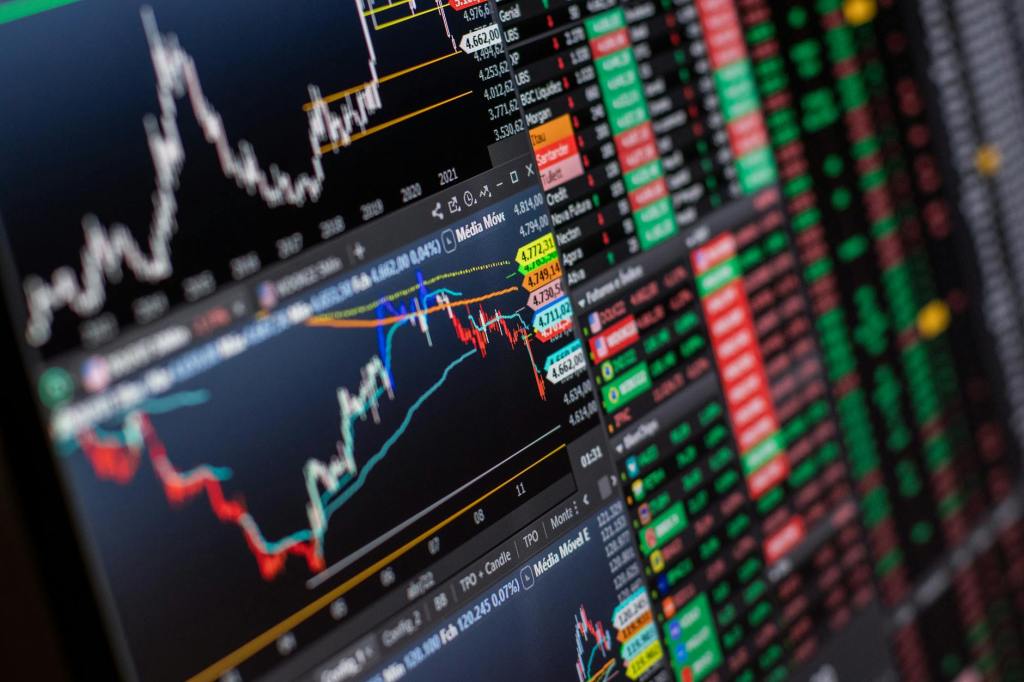
DeepSeek’s rise is not merely the story of one Chinese startup disrupting Nvidia. It is a symbol of a larger shift reshaping the global technology landscape. The barriers to AI development are falling, competition is intensifying, and the race for dominance is becoming increasingly unpredictable.
Wall Street learned that lesson the hard way when Nvidia lost $600 billion in a single day.
And if DeepSeek’s sudden emergence proves anything, it is that the next technological earthquake may already be forming somewhere no one is watching.


Leave a Reply